
I am grateful to Enrico Gloria for his rebuttal to my article.
Although I am now a defense-tech scientist, my article draws on over a decade of scholarly and policy research. I previously served as an assistant professor at the University of Denver and a faculty affiliate at Tufts University. My research, drawing on fieldwork in the PRC, Taiwan, Indonesia, Malaysia, and the Philippines, examined Chinese capital and elite coalitions across Southeast Asian infrastructure, energy, mining, processing, and illicit capital, was supported by over US$2 million in competitive grants, including Minerva-funded research and Carnegie-supported work, and received several awards in the United States and abroad. I also contributed to policy work on corrosive capital, global-local dynamics, host-country agency, the United Front, and transnational crime. Gloria and I have never met in person, but I served as the workshop discussant for his co-authored paper and later gave a lecture at Tsinghua University at the invitation of Tang Xiaoyang.
Despite the risks identified in my previous article, I agree with Gloria that studying in the PRC provides language skills and situated knowledge that cannot be fully reproduced elsewhere, while educational exchange preserves relationships during political tensions. UP’s safeguards are encouraging, although whether they address these vulnerabilities remains open. I never argued that Filipinos should not study in China or that PRC-trained scholars invariably reproduce Beijing’s positions. Some critics attribute this determinism to my argument, while Gloria characterizes it as “indirectly casting doubt” on the “scholarship and credibility” of PRC-trained and PRC-funded scholars. Yet my original article called them “serious scholars” who “produce rigorous work,” a point my clarification repeated.
Beyond disagreements over what my article said or “really” meant, we differ on three questions concerning risk, knowledge, and method: how much scrutiny the PRC warrants as an educational provider, how epistemic narrowing should be understood, and whether proximity produces privileged knowledge.
Why the PRC warrants greater scrutiny
First, risk depends on the provider’s objectives and capabilities because similar educational instruments do not create equal vulnerabilities. The PRC seeks to reshape parts of the international order, although scholars disagree over whether it seeks to supplant US leadership. For the Philippines, Beijing denies Philippine sovereign rights in the West Philippine Sea and attacks Manila’s deepening security relationship with Washington. The PRC ranks among the world’s strongest actors in intelligence, influence, and cyber operations, with the Swiss Federal Intelligence Service identifying China and Russia as Switzerland’s greatest espionage threats. United Front networks and CCP-triad linkages augment these capacities, although these relationships are uneven and not always directed by Beijing. Philippine authorities have investigated suspected Chinese espionage, including cases involving Filipino participants and allegations that a dismissed mayor linked to scam compounds worked for China’s Ministry of State Security. This pattern is less evident in the public record for other educational providers.
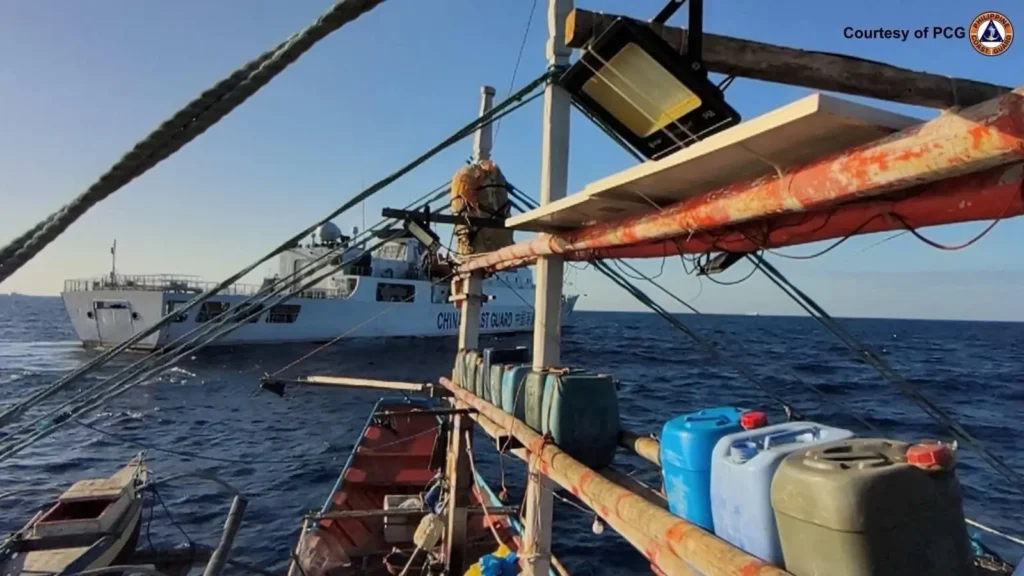
Second, scholarship on the PRC finds that conventional social-science and policy categories do not map cleanly onto Chinese actors. Public and private ownership are entangled under party-state capitalism; civilian, law-enforcement, and military roles can blur across the China Coast Guard and maritime militia; diplomatic representation and political intervention can merge when the Chinese Embassy attacks independent media; development finance can combine policy and commercial objectives; economic structures can generate channels exploited by criminal networks; and party committees can exercise authority within private firms. Greater scrutiny is warranted because conventional categories apply especially poorly in China, including in its universities, where party and administration blur.
Third, these risks grow as PRC educational provision expands through opaque channels across Southeast Asia. Filipinos “still gravitate toward more traditional destinations,” but the PRC offers far more state-backed scholarships: the Lowy Institute estimated around 10,000 annually for Southeast Asian students, against 2,819 from Japan and fewer than 600 Fulbright awards across East Asia-Pacific. American and Japanese awards come through identifiable agencies with open records, while PRC scholarships flow through many channels for which comprehensive data are not publicly accessible. That opacity, compounded by gaps in Philippine institutional familiarity, keeps authorities from fully assessing the security risks these programs pose. Gloria’s distinction between “potential” and “actual coercive use” is logical, but the sanctions literature he invokes shows that coercion works mostly as a threat because targets that will yield do so before anything is imposed. The “asymmetric dependence on Chinese funding” he describes is the same kind of vulnerability: that dependence becomes an increasingly strong influence on what scholars and universities do before anyone is coerced.
Epistemic narrowing
Gloria emphasizes a different form of epistemic narrowing, which I call geographic-linguistic narrowing, in which Philippine knowledge of China has “relied heavily on English-language sources” and Western interpretations. My concern is institutional narrowing, which prevents PRC-based scholars from fully exploring politically sensitive questions. Gloria acknowledges that scholars in China face “boundaries and norms” they “cannot cross,” although he does not explain what they exclude or how those constraints shape scholarship within China. He proposes instead judging PRC-trained scholars by “the scholarship they actually produce,” citing his own research on Chinese sanctions to show that such constraints do not mean the scholarship “simply reproduces official narratives,” even though I never made that claim and his example does not address institutional narrowing.
Consider whether PRC-based scholars could defend the 2016 arbitral award or call Xinjiang a genocide. Two PRC scholars known for research on Uyghur society are serving life sentences. Analyzing 5,000 publications from 1985 to 2022, Ning Leng and Elizabeth Plantan found that sensitive topics disappeared from Chinese venues or moved abroad. Sheena Greitens and Rory Truex reported that among 562 China scholars abroad whose research required access to China, 9 percent had been “invited to tea” by security officials and 68 percent considered self-censorship a problem in the field. As reliance on PRC funding and access grows, its epistemic boundaries can be reproduced elsewhere, narrowing the range of questions scholars ask. On this point, Gloria focuses on what scholars produce, while institutional narrowing concerns the research they do not or cannot pursue. It is far more severe in high-capacity authoritarian systems with extensive coercive reach. Recognizing it is the first step toward mitigation.
The contrast between the wider variance of public positions in the United States and the narrower variance in the PRC reveals this narrowing; the West Philippine Sea is one example. Despite a near-bipartisan consensus on confronting China, two DC-based institutions publicly challenge it: the Quincy Institute advocates restraint toward Beijing, while Defense Priorities calls for an end to the US alliance with the Philippines. US scholars, journalists, and activists also debate whether violence against Native Americans constituted genocide, whether reparations are warranted, and other sensitive questions, despite recent pressures on academic and press freedom. In contrast, after the 2016 arbitral award, Julian Ku found that PRC international-law scholars either backed Beijing’s rejection of the tribunal or stayed silent, with the lone dissenter based in Australia. Yet a March 2016 Chatham House roundtable recorded more varied views among Chinese participants in private. Similar constraints apply to Tibet, Hong Kong, Taiwan, and many other issues, where perspectives challenging official narratives have far less room.
Methodological nationalism and Global China
I agree that studying in the PRC is valuable, but Gloria privileges it by describing Philippine scholarship on China as reliant on “second-hand analysis,” contrasting this with having “actually studied there,” and urging Filipinos to know China “as close to the ‘source’ as possible.” This hierarchy reflects methodological nationalism because it treats China’s territory as the natural container of Chinese society and territorializes epistemic authority, granting greater authenticity to knowledge produced within the PRC. Global China scholarship instead treats Chinese actors and relationships as embedded in transnational systems. Ivan Franceschini and Nicholas Loubere develop this approach as a method. Ching Kwan Lee describes it as an analytical strategy for overcoming the methodological nationalism that has long shaped China studies.
My research follows this tradition by tracing how varied Chinese and host-country actors transform each other’s interests, strategies, and impacts. In 2017, I showed that multiple “Chinese actors,” from state-owned enterprises to small operators, depended on multiple “Filipinos,” from local regulators to brokers and communities, a pattern my subsequent work confirmed. Jan Robert Go, one of the scholars I named in my previous article, echoes the Global China tradition in another domain, showing how Filipinos encounter multiple Chinas through consumer goods, entertainment, and digital media.
Gloria is right that relying solely on scholarship “produced in more developed Western countries” could narrow “the routes through which Filipinos can come to know China.” My article never opposed studying in the PRC but named the risks and advocated “domestic training and diversified partnerships” alongside Mandarin instruction. I agree that “proximity matters,” but proximity to the actors and processes in question weighs more than proximity to territory. Location within the PRC does not make knowledge inherently superior because research inside and outside produces complementary forms of situated knowledge. Scholars elsewhere have greater space to examine sensitive issues, though some forms of situated knowledge are difficult to obtain outside the PRC. Different locations offer distinct epistemic advantages.
In sum, Gloria and other PRC-trained Filipino scholars are indispensable to the Philippines’ capacity to understand and respond to China. Acknowledging that does not negate the need for greater scrutiny of PRC educational relationships, attention to institutional narrowing, and China expertise developed across national borders.