
Beijing is testing U.S. resolve across the First Island Chain. Washington must pair clearer commitments with the capacity to uphold them.
U.S. deterrence in the Pacific is fraying. Restoring it requires clearer commitments to resist China’s coercion, and the means to make them credible. As President Trump sends mixed signals and the Iran war drains critical U.S. munitions, Beijing is intensifying pressure on Taiwan, Japan, and the Philippines, testing whether Washington will act or settle for statements.
China’s gray-zone warfare against all three, coupled with its efforts to control the seas and straits between them, reflects a single coercive campaign across one connected theater. Each unanswered provocation reverberates across the First Island Chain, eroding confidence in Washington’s resolve.
Taiwan anchors the First Island Chain, the archipelagic arc spanning Japan, Taiwan, and the Philippines that separates the East and South China Seas from the Philippine Sea and the wider Pacific Ocean. Control of Taiwan would allow Beijing to break that chain, turning Taiwan’s eastern coast into a submarine bastion, dominating the Miyako and Luzon Straits, and projecting power deep into the Pacific, thereby constraining Washington’s ability to defend its regional allies.
The same waters that make Taiwan strategically important are also critical to the global economy. Taiwan accounts for over 90 percent of global advanced semiconductor production. In 2024, more than $2.4 trillion in goods—21 percent of global maritime trade—passed through the Taiwan Strait. The Strait of Hormuz crisis is serious, but a war over Taiwan could be broader still, disrupting shipping, manufacturing, and technology supply chains all at once, triggering an estimated $10 trillion economic shock in the first year alone.
Defending Taiwan is a matter of American interests as much as it is shared values. And the risks are only rising.
Since 2022, Beijing has sought to erase the Taiwan Strait’s median line as a buffer. In 2025, People’s Liberation Army aircraft entered Taiwan’s de facto air defense identification zone a record 3,764 times, up 22.4 percent from 2024. After inspecting nearly 200 vessels in June 2026, China extended near-constant patrols into waters east of Taiwan. In August, an Indonesian frigate joined China’s first naval drill with a foreign military in those waters. Ahead of Typhoon Dolphin, Beijing attempted to impose “traffic control measures” over the strait—asserting law-enforcement authority that could prefigure a blockade. China’s military has also built full-scale replicas of Taiwan’s Presidential Office Building and an Arleigh Burke-class destroyer to prepare for an assault on Taipei and a conflict with the United States.
Beijing’s territorial ambitions also extend beyond the Taiwan Strait. Chinese Coast Guard vessels have asserted jurisdiction over Japan’s exclusive economic zone south of Yonaguni, less than 70 miles from Taiwan. In June 2026, nuclear-capable Chinese and Russian bombers patrolled near Okinawa. A month later, their warships conducted live-fire drills inside Japan’s exclusive economic zone.
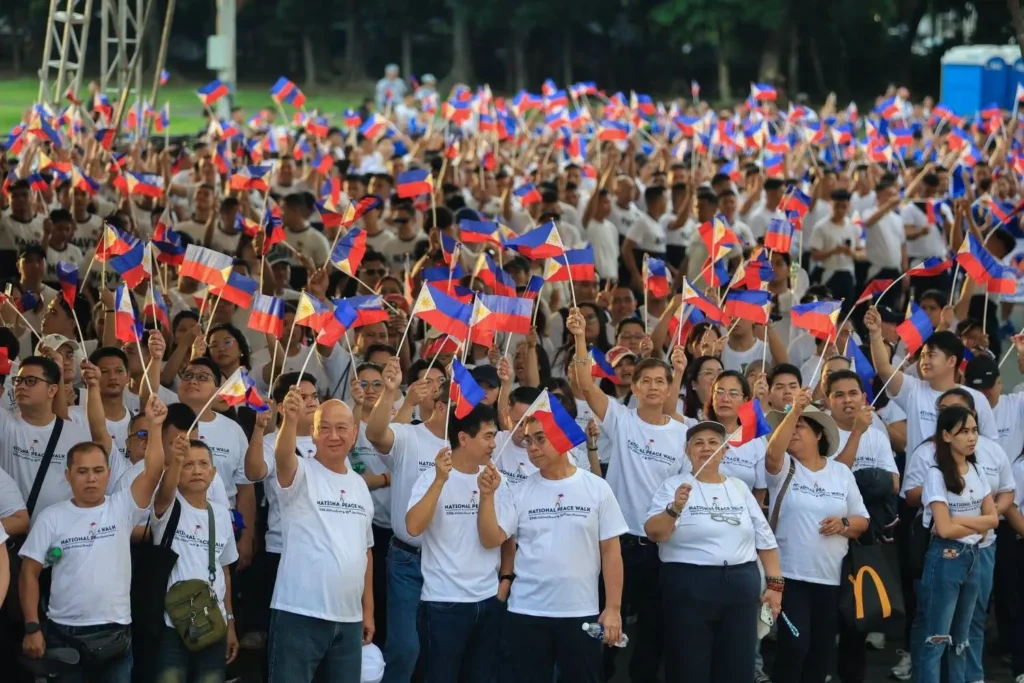
Meanwhile, Chinese scholars recently claimed Batanes, the Philippines’ northernmost province, belongs to China. Philippine Defense Secretary Gilberto Teodoro has asserted that in a Taiwan conflict, Beijing could seek to seize the islands to control the Bashi Channel—and with it, access to and from the Pacific.
In July, China test-fired a submarine-launched ballistic missile over the Philippines. Its coast guard bludgeoned a Filipino sailor and established regular “law enforcement” patrols around Scarborough Shoal. On August 3, the PLA surged an amphibious group and bombers armed with anti-ship missiles 120 nautical miles from the Philippines to enforce its unfounded claims over the shoal. Beijing reinforced that pressure by banning unauthorized fishing within its declared “nature reserve,” a move Washington rejected as a destabilizing attempt to deny Filipino fishermen their traditional grounds.
Philippine President Ferdinand Marcos and Japanese Prime Minister Takaichi Sanae understand that their countries’ security is intertwined with Taiwan’s. Both leaders have independently cautioned that their country’s proximity to the island could draw them into a cross-Strait conflict. Takaichi has specifically warned that a naval blockade of Taiwan would be “survival-threatening” for Japan. She’s right.
If Taiwan falls, Japan and the Philippines would face mounting pressure to bend to Beijing’s will. Resistance in the East and South China Sea could collapse, allowing China to dictate passage through waters carrying one-third of global maritime trade. U.S. security guarantees would ring hollow. Japan would feel compelled to acquire nuclear weapons. Pax Americana would crumble, a democracy would be extinguished, and the critical technologies of the twenty-first century would fall under Beijing’s control. China already weaponizes its dominance of rare earths. Control over advanced semiconductors would give it leverage of an entirely different order.
While Taiwan is not a treaty ally like Japan and the Philippines, Washington has given Taipei certain assurances it must honor. Promises still matter. Allies and adversaries alike watch whether America keeps them. But promises require resolve and the capacity to uphold them.
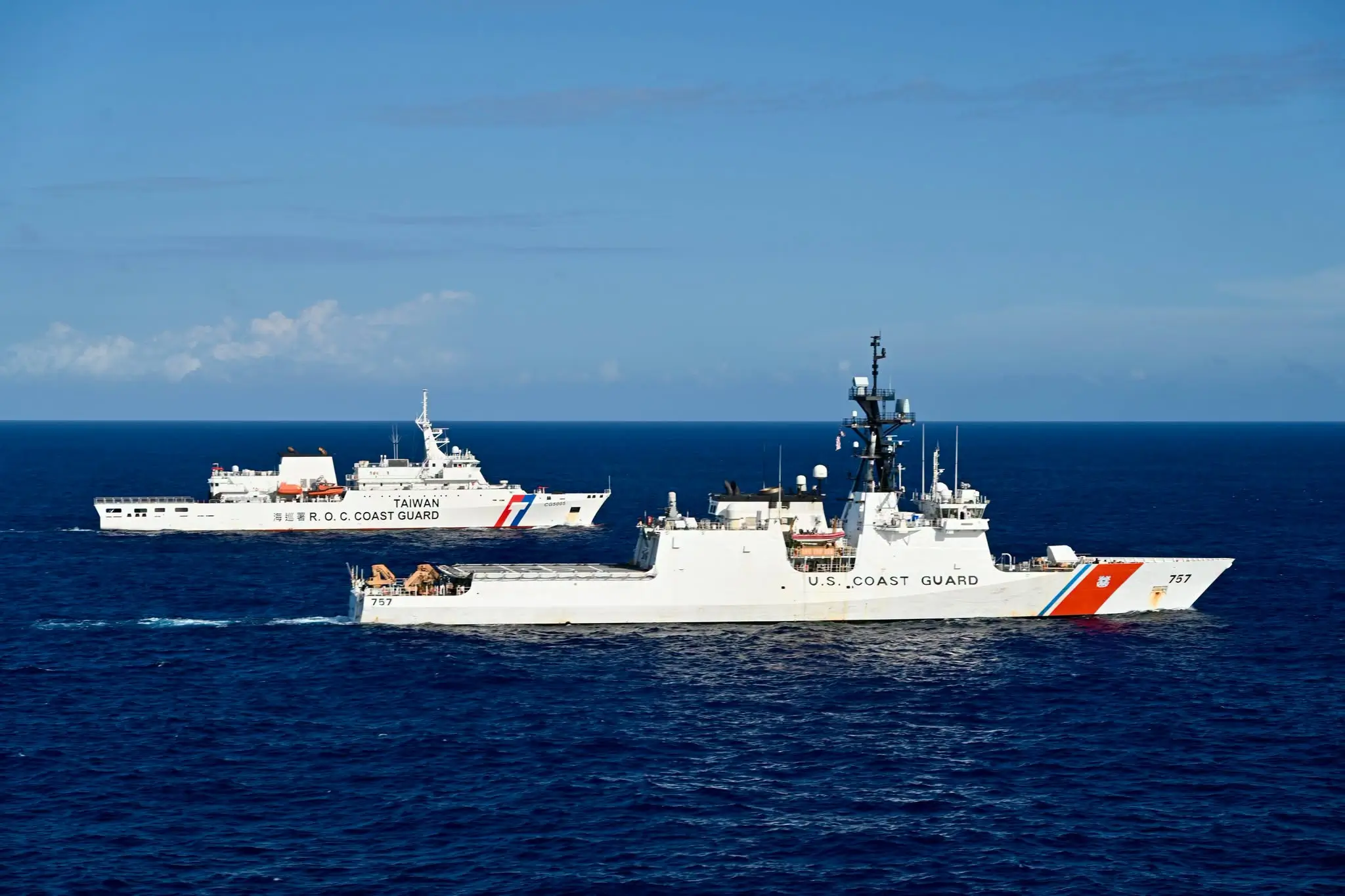
The American Institute in Taiwan’s July 28 publication of a U.S.-Taiwan Coast Guard joint sail, following Beijing’s assertion of law enforcement authority east of Taiwan, was the strongest sign yet. Together with reports of U.S. Special Forces exercising in Taoyuan, part of the five-hundred-person U.S. Joint Training Team in Taiwan, and Taiwanese Defense Minister Wellington Koo’s remark that bilateral cooperation is “far closer than many people imagine,” these public disclosures indicate a willingness to make ongoing, quiet cooperation more visible.
While Taipei’s revelations are welcome, their deterrent signal is actively undermined by Washington. President Trump is currently holding a $14 billion arms package hostage and publicly musing about negotiating the sale with Beijing to secure a September summit with Xi. Trump’s actions risk emboldening Beijing, reinforcing its belief that Washington will avoid meaningful pushback in the Pacific.
Meanwhile, U.S. capacity for an Indo-Pacific fight is eroding. The Pentagon inspector general has warned of “severe degradation” across 11 U.S. facilities in the Pacific, including hangars and storage facilities. The Iran War has reportedly depleted U.S. stocks of ATACMS and PrSM, half of the U.S. Tomahawk inventory, and consumed considerable numbers of Patriot and THAAD interceptors. Together, these shortfalls leave Washington less able to hold Chinese military assets at risk, defend its Pacific bases, or sustain a prolonged campaign over Taiwan.
To address these challenges, Washington should invest in infrastructure, fully fund and expand existing multiyear procurement authorities, and streamline export controls. Through mechanisms like the Partnership for Indo-Pacific Industrial Resilience, Washington should help build a distributed, allied arsenal of democracies that complements existing efforts, such as Japan’s PAC-3 production, to manufacture critical interceptors, munitions, and drones that the U.S. industrial base cannot supply on its own.
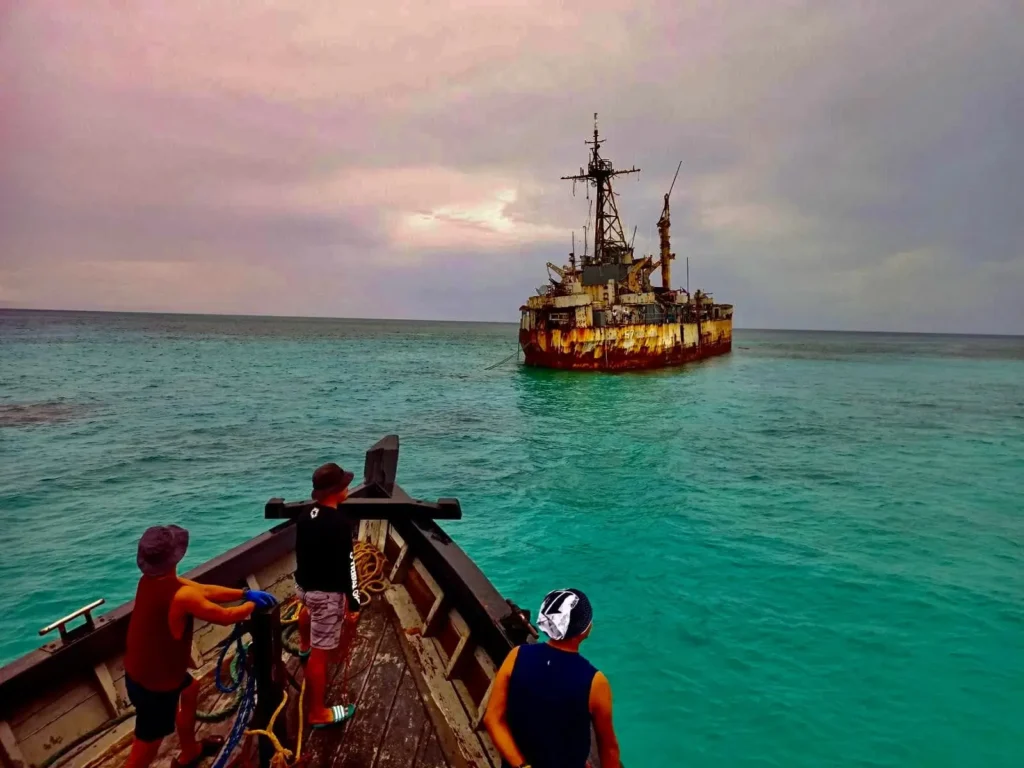
Washington must also signal its resolve across the Pacific theater. At sea, it should establish a permanent, rotational presence in the region, with regular, allied coast guard patrols near Scarborough Shoal, through the Luzon and Miyako Straits, and east of Taiwan. The United States should further consider escorting Philippine resupply missions to Second Thomas Shoal.
For Taiwan, Washington should clarify its willingness to defend the island, unfreeze the $14 billion arms sale, and honor the Reagan-era pledge not to negotiate such sales with Beijing. Abandoning a four-decade commitment while leaving Taiwan with fewer resources to deter China is deeply misguided. Giving Taiwan the means to remain free is not a call for war. It is how the United States deters one, preserving peace along the First Island Chain and across the broader Indo-Pacific. Beijing’s campaign is coordinated. America’s response must be, too.