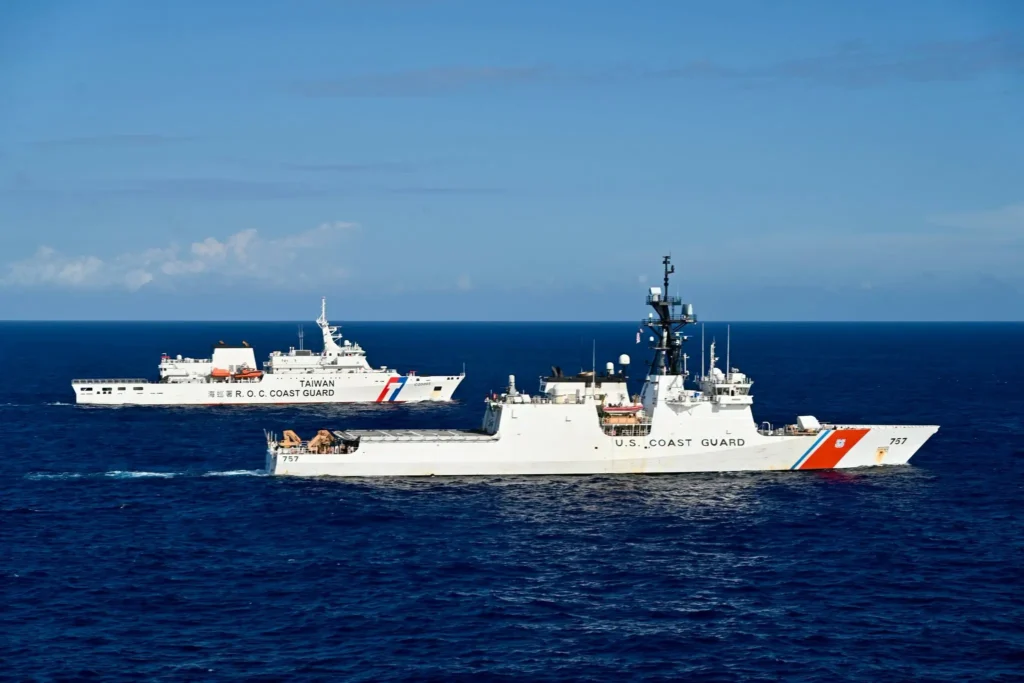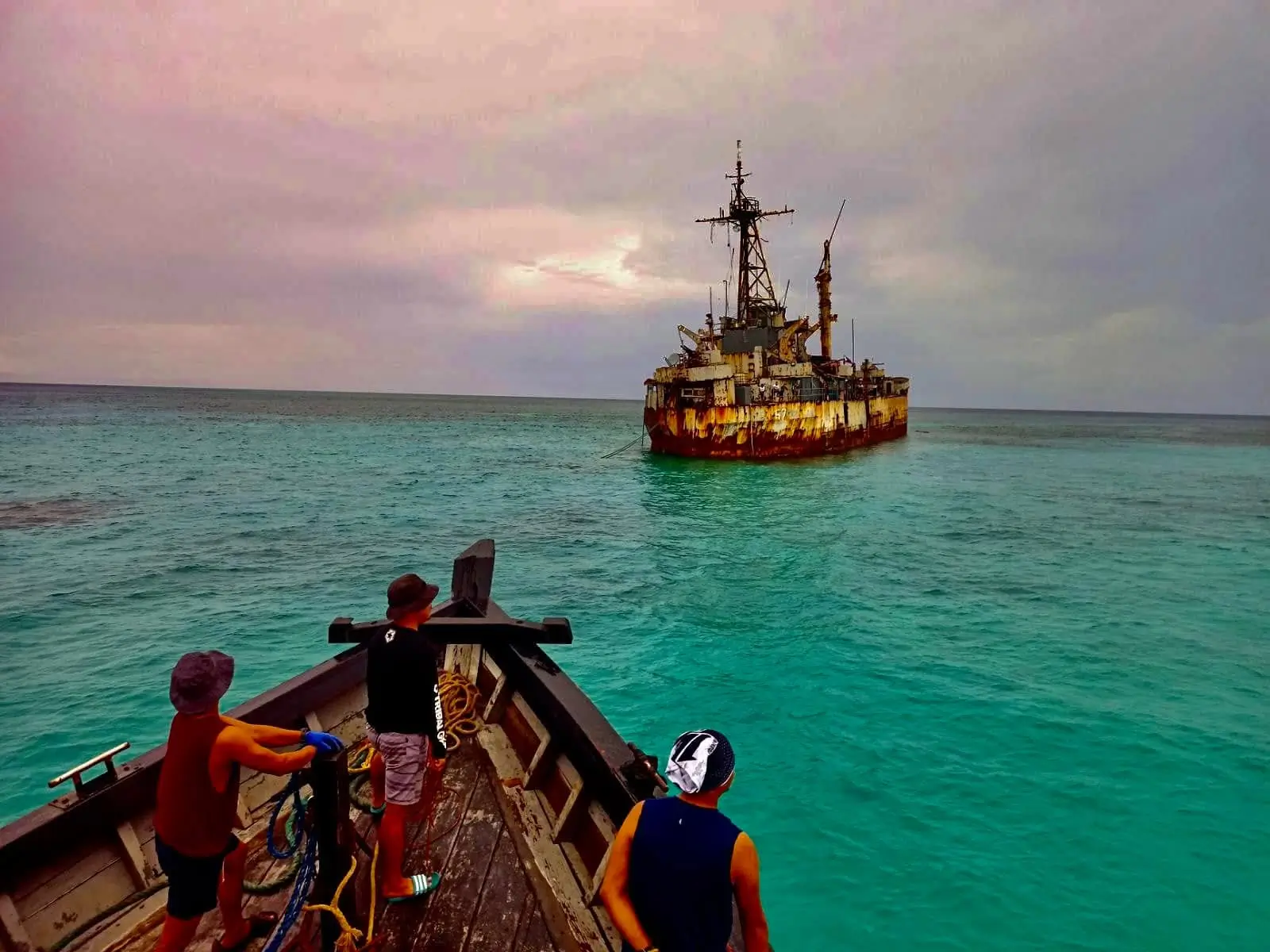

On 24 September 2026, China Coast Guard vessels obstructed a Philippine rotation and resupply mission to the BRP Sierra Madre at Ayungin Shoal, known internationally as Second Thomas Shoal. The Philippine Coast Guard reported maneuvers that created a serious risk of collision; Beijing described its measures as lawful and accused Manila of provocation.
The episode appears to be the first hostile incident affecting these missions since the provisional arrangement reached by the two governments in July 2024. A week earlier, each side had accused the other of deliberate ramming near Sabina (Escoda) Shoal.
Such incidents raise a question that reaches beyond relations between Manila and Beijing. Will maritime disputes in the Indo-Pacific remain subject to international law, restraint and negotiated mechanisms, or will persistent presence and coercion at sea settle them in practice? Europe has a direct stake in the answer, even though it approaches the South China Sea from a distance.
A distant sea with close consequences
France holds a permanent military presence in the Indo-Pacific through its forces stationed in New Caledonia, French Polynesia and the south-western Indian Ocean, and the United Kingdom maintains a garrison in Brunei, a naval facility in Singapore and patrol vessels deployed in the region. Neither is a littoral state of the South China Sea, and the European Union carries neither the alliance obligations nor the security responsibilities of Washington. Europe’s interest lies in the trade routes and supply chains that cross these waters, and more fundamentally in a maritime system whose rules remain predictable enough for states, companies and societies to plan ahead. Europe therefore has a stake in the principle that maritime rights rest on law rather than on the capacity of the strongest actor to impose facts at sea.
This explains the weight the EU gives to the United Nations Convention on the Law of the Sea. On the tenth anniversary of the 2016 arbitral award, the High Representative stated on behalf of the EU that the award is final and legally binding on the parties and must be fully implemented. Beijing rejects the award, considers the arbitration invalid and holds that questions of sovereignty and maritime rights belong to negotiation between the states directly concerned. Manila, relying on the ruling, regards Second Thomas (Ayungin) Shoal as part of its exclusive economic zone and continental shelf. This legal divergence will persist for the foreseeable future. The immediate task consists in preventing it from producing cycles of escalation at sea.
The Philippines as a test case
The Philippine experience shows how maritime competition has changed in character. Coast guards, fishing fleets, maritime militia, naval vessels, surveillance systems, legal arguments and public communication now operate within the same contested space, in a gray zone between peacetime rivalry and armed confrontation.
Manila has responded on three fronts. It has invested in maritime domain awareness, so that it can know what happens at sea and attribute actions quickly. It has documented incidents in public, with footage and journalists aboard coast guard vessels, which exposes a form of coercion designed to remain ambiguous. It has also broadened its partnerships. Around its alliance with the United States, the Philippines has concluded visiting forces agreements with Australia, Japan, Canada and New Zealand. France signed such an agreement in Paris on 26 March 2026, the first between the Philippines and a European state. The Philippine Senate committee on foreign relations approved it in September, and the agreement now awaits plenary concurrence. Talks with the United Kingdom have reached a second round. Defense Secretary Gilberto Teodoro told senators that his country had no choice but to widen its defense partnerships.
The Philippines also chairs ASEAN in 2026 and has made the Code of Conduct its maritime priority. The July 2026 target agreed between ASEAN and China in 2023 has passed. The International Crisis Group reports continuing divisions over the binding character of the code, its geographic scope and its treatment of third-party military activities. Beijing has also sought to reserve energy development in disputed waters to companies from littoral states. These questions concern Europe directly, since a code restricting the lawful activities of external navies or energy firms would affect European interests. The EU has accordingly expressed support for an effective, substantive and legally binding code consistent with UNCLOS.
Europe’s emerging role
Europe has gained relevance in the very areas Manila has prioritized. The EU and the Philippines launched a Security and Defense Dialogue in 2025, covering maritime security, cyber security, hybrid threats and foreign information manipulation. In May 2026, the EU organized a seminar on maritime crisis response in Manila, followed by the multi-agency Exercise Alalayan. In July, the Council adopted a €15 million assistance measure under the European Peace Facility to strengthen the maritime domain awareness of the Armed Forces of the Philippines through non-lethal equipment and training, the first such measure in the Indo-Pacific. The amount remains modest compared with major defense programs. Its political significance lies in the instrument itself, which carries the relationship from development cooperation and trade towards a strategic partnership.
France presents itself as an Indo-Pacific nation, and the regional strategy it has developed since 2018 emphasizes strategic autonomy, international law, multilateralism and resilience. Teodoro cited this dual European and Pacific identity, together with France’s support for the 2016 award, when he defended the visiting forces agreement before Philippine senators. French forces took part in the Balikatan exercises as observers in 2024 and moved to active participation in 2026. France also brings long experience in policing vast exclusive economic zones against illegal fishing and trafficking, which corresponds to Philippine needs.
A contribution distinct from great-power rivalry
The South China Sea is widely read through the lens of competition between the United States and China. This dimension is real: the Philippines is a treaty ally of the United States, and Beijing views American military cooperation with Manila as part of an effort to contain its rise. The binary reading leaves out much of the region, however. Southeast Asian states assess their environment in different ways, and close American partners also seek room for maneuver. ASEAN members continue to value dialogue, regional centrality and negotiation with China, including when they disagree sharply over specific claims.
Europe’s potential contribution rests in part on this difference. European actors can add a layer to the regional architecture that complements military deterrence: maritime awareness, coast guard cooperation, satellite monitoring, secure communications, environmental protection, cyber resilience, training, legal expertise and support for regional mechanisms. Hard security considerations remain in place, yet these instruments widen the range of responses available to states under maritime pressure, and they allow Europe to contribute to regional security while maintaining a distinct political and strategic profile.
Three orientations would give this contribution more weight. The first concerns the gray zone. Extending cooperation to the Philippine Coast Guard, to maritime data sharing and to the documentation of incidents would reinforce Manila’s most effective instrument, which consists in making coercion visible and attributable. Regional platforms such as the Information Fusion Centre in Singapore offer a suitable framework. The second concerns predictability. European naval assets are finite, and crises closer to Europe, from Ukraine to the Middle East, will take precedence over Asian deployments. Modest and regular presence, planned over several years among France, the EU and willing member states, would carry more weight than occasional high-profile visits. The Coordinated Maritime Presences concept, which the EU has applied in the Gulf of Guinea and the north-western Indian Ocean, offers a model for pooling limited assets. The third concerns the Code of Conduct, where discreet legal and technical support to ASEAN negotiators, offered on request, would give substance to the EU’s stated position.
Towards a networked maritime architecture
These European initiatives belong to a wider transformation of the Indo-Pacific. Much of the debate still centers on the United States and China, yet some of the most significant developments involve states that seek no regional hegemony while holding substantial diplomatic, economic, technological or military capabilities. Japan, Australia, South Korea, France, India, Indonesia, Vietnam and the Philippines occupy very different positions, and each seeks to preserve its agency in a constrained environment.
Their cooperation follows capabilities and interests. Australia trains with Philippine forces. Japan contributes coast guard vessels and maritime infrastructure. South Korea brings a growing defense industry and a deepening relationship with Manila, which has acquired Korean-built frigates and light combat aircraft. France offers military, maritime and diplomatic assets, and the EU contributes regulatory, financial, technological and capacity-building instruments. Such networks leave alliances and national differences in place. They add channels of cooperation and reduce the region’s dependence on any single bilateral relationship.
Diversification differs from equidistance. For Manila, additional partnerships complement the alliance with Washington and broaden the capabilities and political options available in a networked security environment
From presence to resilience
Europe will play no role in the South China Sea comparable to that of the United States or the regional states. The relevant measure of its engagement lies in its contribution to regional resilience: the capacity of states to monitor their maritime environment, protect their economic activity, document incidents, keep communications secure, coordinate their agencies and respond to pressure without automatic escalation. Strategic rivalry in these waters will endure. A realistic aim consists in keeping it manageable and in preserving meaningful choices for smaller and middle-sized states.
Europe has a stake in that outcome because the principles involved extend far beyond Southeast Asia. Selective application of maritime rules, disputes settled by coercive presence and pressure on smaller states to choose between great powers would shape Europe’s own environment as well. For Manila, the challenge consists in defending its maritime rights while keeping confrontation under control. For Europeans, it consists in showing that their attachment to international law applies beyond their immediate neighborhood.
The answer is likely to emerge from a dense web of practical partnerships among ASEAN states, European countries, Japan, South Korea, Australia, India and others willing to invest in maritime stability. Europe’s strategic relevance in the South China Sea will be measured less by the number of European warships passing through its waters than by its ability to strengthen the resilience, capabilities and strategic agency of the coastal states.