
On July 29, 2026, Defense Secretary Gilberto Teodoro Jr. told the Kapihan sa Manila Bay forum that foreign-linked educational exchanges deserved closer scrutiny, citing a SeaLight investigation that identified Jinan University as a major training site for Chinese-language teachers in Philippine schools. Weeks earlier, the same university had hosted a symposium where Chinese scholars concluded that Batanes, the Philippines’ northernmost province, was a “natural geographical extension” of Taiwan and therefore belonged to China, a claim Teodoro dismissed as baseless. Two days later, the Department of National Defense formalized his call, describing transparency over foreign state funding in education as a basic responsibility of government.
Teodoro is right about the risks, but Philippine universities face a conflict they did not create. The Philippines was once regarded as one of Asia’s leading centers of higher education, with the University of the Philippines at its apex. Decades of underinvestment, however, have left its universities struggling to keep pace with better-funded institutions elsewhere in the region. Philippine R&D spending remains around 0.3 percent of GDP. In December 2024 alone, the national budget cut UP by P2.076 billion, while 39 state universities asked Congress to restore P14.48 billion, warning that they were already restricting admissions and relying on student fees. Underinvestment also affects the quality and sustainability of research because universities need resources for conferences, exchanges, research visits, fieldwork, and the professional networks through which expertise develops. This underinvestment has pushed universities toward external funding just as China’s rise has made Mandarin instruction and China expertise increasingly important.
Beijing has filled part of that gap. By 2020, the Chinese Ambassador Scholarship had supported more than 300 students at UP and Philippine Normal University, while a Hainan program funded 50 Palaweños to study in China. Chinese funding helped establish Confucius Institutes at Ateneo and UP. Ateneo’s institute served more than 3,000 students, continues to offer scholarships and exchanges, while a separate Confucius Institute program implemented by Angeles University Foundation and Fujian Normal University committed to training 300 public-school teachers over five years through a master’s program that included six months of study in China. These programs support activities Philippine universities cannot adequately finance themselves. But many of their sponsors are connected, directly or indirectly, to the state challenging Philippine sovereign rights in the West Philippine Sea. Chinese universities operate under Communist Party oversight and laws requiring Chinese organizations to assist state intelligence work, whatever a local partnership agreement promises. What is rational for each cash-strapped university therefore adds up to a dependency the country cannot afford.
Three major vulnerabilities
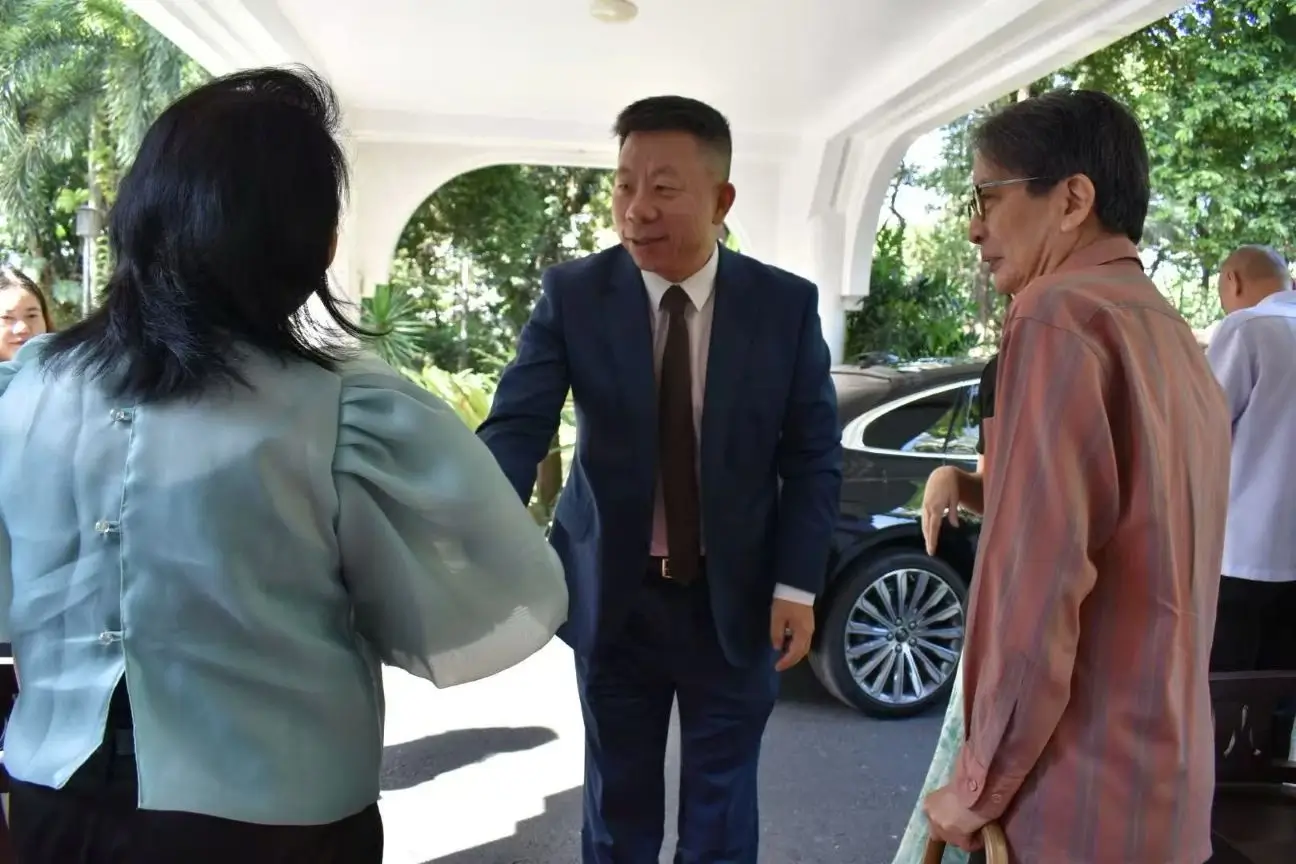
That dependency creates three distinct risks. First, sustained Chinese funding can give Beijing leverage over scholars and universities. Scholarships and partnerships make access to Chinese universities, archives, visas, conferences, and future funding important to academic careers. This does not mean Filipino scholars will act against Philippine interests, but criticism of Beijing can carry professional costs and encourage silence, a pattern documented elsewhere by Human Rights Watch. Universities face similar pressure when Chinese funding supports programs they cannot finance themselves. On February 25, 2026, the Chinese Embassy began a public campaign against the Philippine Center for Investigative Journalism and journalist Regine Cabato over her reporting on pro-China disinformation. On March 10, one day after the Committee to Protect Journalists demanded that the campaign stop, UP welcomed Ambassador Jing Quan and renewed the Chinese Ambassador Scholarship agreement. Neither event caused the other, but the juxtaposition exposes the bind: the embassy attacking independent Philippine journalism remained a funder that a cash-strapped national university had strong reasons not to alienate.
Second, it carries a risk of epistemic narrowing in the China expertise the Philippines produces. By epistemic narrowing, I mean that even serious scholars can produce rigorous work while a PRC-constrained research environment shapes which questions, evidence, and conclusions remain easiest to pursue. Scholarships place Filipino scholars inside universities governed by Communist Party institutions and connect them to Chinese mentors, conferences, and professional networks. UP political scientists Jan Robert Go and Enrico Gloria, for example, received advanced training in China and built research agendas around Chinese politics and foreign policy, while historian Jely Galang developed China-facing networks through exchanges and research on Chinese communities. None of this makes their scholarship propaganda. But when a country’s China expertise develops increasingly through institutions embedded in the party-state, its knowledge of China risks tilting toward what that system makes accessible and away from what it works hardest to obscure.
Third, educational exchanges can create counterintelligence vulnerabilities. Chinese scholarships and partnerships provide sustained access to Filipinos who may later enter government, the military, critical industries, or other sensitive fields. Receiving Chinese support does not make someone an intelligence asset, but these relationships can help a foreign state identify, cultivate, or pressure promising individuals as their careers advance. The detention of three Palaweños who had studied in China on espionage allegations does not prove that scholarships are recruitment pipelines, but it demonstrates why such exchanges require counterintelligence scrutiny and safeguards.
Reclaiming education sovereignty
Manila must take three steps to reclaim control over its educational system. First, the government should invest in domestic training and diversified partnerships, beginning with state money. Mandarin competence remains a strategic asset for a country whose largest trading partner and most dangerous maritime dispute both run through the language; the problem was never the subject taught. Taiwan already demonstrates the alternative supply. Allied countries should further allocate dedicated slots for Filipino higher education under Japan’s MEXT, Australia Awards, Fulbright, and Taiwan’s programs. Matched with a doctoral fellowship line inside the Commission on Higher Education’s proposed P34 billion, those slots would cost a rounding error and end the one-funder dependency.
Second, Congress should mandate disclosure, converting transparency from an institutional favor into a legal duty. The principle already exists on paper: the Transnational Higher Education Act requires partnership agreements to be submitted to the Commission on Higher Education and declares their critical details open to public scrutiny. But the law is built for study programs, defines no publication mechanism, and does not reach scholarship funds and gifts. A statutory register requiring universities to publish every foreign agreement, funding amount, and staffing arrangement, including the Confucius Institute contracts at Ateneo and UP, would complete the principle Congress already wrote. A published contract preempts the suspicion that secrecy invites, so the universities themselves gain the most from disclosure.
Third, the security establishment and the universities should build standing cooperation, of which a review panel is only the first piece. That cooperation must be a genuine partnership that respects the spirit of the 1989 UP-DND accord, which governed how state forces dealt with the university until the defense department unilaterally abrogated it in 2021, a rupture the academic community has not forgotten. Working within that history, the agencies and the universities could build a standing relationship on influence operations: the state briefs scholars on what it sees, and scholars bring the language skills and area knowledge it lacks. In sum, the danger is not that Filipino scholars who studied in China are disloyal or that academic exchange is inherently suspect. It is that decades of underinvestment have allowed the state directly challenging Philippine sovereign rights in the West Philippine Sea to finance programs, cultivate relationships, and acquire leverage inside Philippine universities. The answer is stronger domestic funding, mandatory transparency, counterintelligence safeguards, and sustained cooperation between universities and the state, not indiscriminate scrutiny. If Manila considers higher education as part of its national infrastructure, it must invest enough to protect its independence.