
There was a time when an argument for trying could at least be made. If Beijing was serious about its long-held preference for bilateralism and for “shelving sovereignty disputes in favor of joint development,” the reasoning went, it had every incentive to build one successful case with the Philippines and use it as a model for its dealings with everyone else. Testing whether China meant what it said was, on its own terms, defensible.
That test has now been run, more than once, and the answer is in. Every attempt at joint development has either collapsed or worked to Beijing’s advantage, and not one of them encouraged China’s conduct at sea to comply with the UN Convention on the Law of the Sea (UNCLOS). The problem was never that the two countries picked the wrong formula or the wrong moment. The problem is that the fundamentals are irreconcilable, and no amount of goodwill on Manila’s part can fix what Beijing has no intention of conceding.
Keeping the issue alive while China changes nothing about its behavior or its claims does not bring the Philippines closer to tapping its resources. It hands Beijing something it wants more than the oil itself—the appearance of cooperation.
Looking back
Start with the Joint Marine Seismic Undertaking (JMSU). In 2005, the Arroyo administration signed a tripartite agreement with China and a reluctant Vietnam covering more than 55,000 square miles west of Palawan, over 9,000 square miles of which were undisputed Philippine waters measured from our own baselines. The deal was unconstitutional, per a decision by the Philippine Supreme Court in 2023. It let Beijing’s state-owned oil company conduct surveys inside the Philippine exclusive economic zone without fully sharing critical data, and it gave Chinese vessels access to parts of the West Philippine Sea where they had previously kept little or no presence. Think of Recto Bank.
The JMSU was supposed to be a confidence-building measure under the 2002 Declaration on the Conduct of Parties and a test case for joint exploration. It failed on both counts. It was negotiated in secret, with a confidentiality clause that locked away the documents for many years, and it was directly tied to a $904-million package of Chinese investment pledges that included the graft-ridden Northrail and NBN-ZTE projects, both of which were eventually cancelled. To get around the constitutional requirement that natural resources be developed under the full control and supervision of the State, the agreement avoided the words “joint exploration” altogether and used the words, “scientific research.” It became so unpopular that renewal was impossible, and it expired in 2008.
Then came Service Contract 57. In 2006, the Philippine National Oil Company moved to partner with the China National Offshore Oil Corporation for a 2,700-square-mile area off Busuanga in Palawan, notably outside the nine-dash line. The arrangement never moved forward. Philippine policy later shifted toward a more transparent and competitive process, and SC57 was reopened to other parties. CNOOC was no longer entitled to special treatment. If it truly wanted in, it could compete like any other company. The lesson is hard to miss: if a deal outside the nine-dash line could not proceed, there is even less reason to believe a more contentious arrangement inside it ever would.
The Duterte administration tried anyway. Between 2018 and 2022, Manila reopened the talks, signed a Memorandum of Understanding in 2018, and lifted the exploration moratorium in 2020. After years of signaling flexibility, the process still collapsed in June 2022, because the core obstacles had not moved: Philippine constitutional limits, sovereignty concerns, and China’s refusal to operate on terms consistent with Philippine law and the arbitral award. Once again, the promise of cooperation produced more illusion than outcome.
That is three failed attempts, and the result was the same every time. The Philippines’ Department of Foreign Affairs should know better by now.
Keeping the issue alive only feeds China’s propaganda machine
Here is the part Filipino officials keep missing. Despite the lack of any real progress, each of these episodes handed Beijing exactly what it wanted.
The fundamentals make this unavoidable. Any agreement with China has to pass two non-negotiable tests: it must comply with the Philippine Constitution, which reserves resource development to the State and to Filipino-owned companies, and it must be consistent with the 2016 Arbitral Award, which the Philippines’ National Security Council has rightly declared non-negotiable. China rejects both. It has never accepted Philippine jurisdiction anywhere inside the nine-dash line, and it continues to reject the 2016 arbitral award outright. When Beijing speaks of “setting aside disputes and pursuing joint development,” its first premise is that “the sovereignty of the territories concerned belongs to China.”That alone makes it a non-starter.
So what is left? Two theoretical pathways, both flawed. One has China bid as a contractor in a Philippine-led service contract inside Philippine EEZ. That was tried, and it never moved. It also raises a fairness question: why should the Philippines share lawful resources with a state that refuses to recognize its sovereign rights while harassing Philippine vessels elsewhere in the same sea? The other pathway is joint exploration in pockets of high seas inside the nine-dash line but outside the Philippine EEZ, which runs straight into Beijing’s own claim of indisputable sovereignty. China would never agree to a framework that dilutes that claim, and the Philippines should not be the one to legitimize the nine-dash line for Beijing.
What China actually wants is joint exploration specifically within the Philippine EEZ, where it can use the language of cooperation to erode the Philippines’ sovereign rights from within.
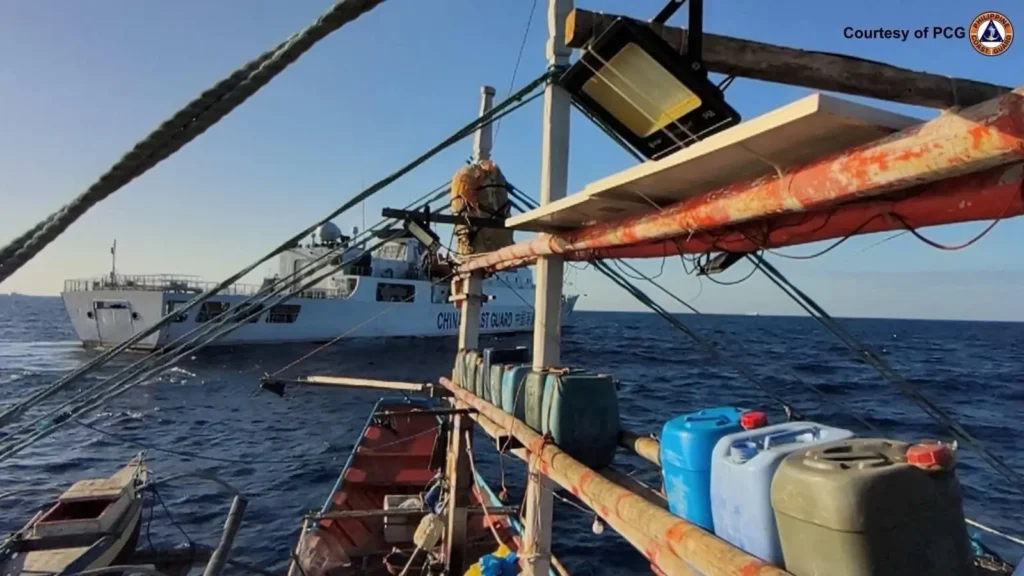
This is why the talks themselves, regardless of whether anything is ever signed, work in Beijing’s favor. China has long used negotiations not to manage disputes, but to project an image of reasonableness while escalating coercion. The point is not the deal; the point is the optics. Renewed talks allow Beijing to soften international criticism, blunt domestic outrage in the Philippines, and flood the conversation with slogans about shared development and win-win cooperation, even as it intimidates Filipino fishermen, obstructs lawful Philippine Coast Guard operations, disregards UNCLOS and the 2016 Arbitral Award, and steals resources that belong to the Philippines.
At home, the talks breed confusion, weaken national consensus, and plant the false idea that cooperation is possible without any meaningful change in Chinese behavior. Beijing gains propaganda value, diplomatic cover, and the appearance of progress — while surrendering nothing.
Every round of talks the Philippines agrees to becomes free publicity for China. Why, then, is the Department of Foreign Affairs helping manufacture that illusion?
Next steps: political will and Recto Bank
The way forward is not another round of talks with Beijing. It is political will at home.
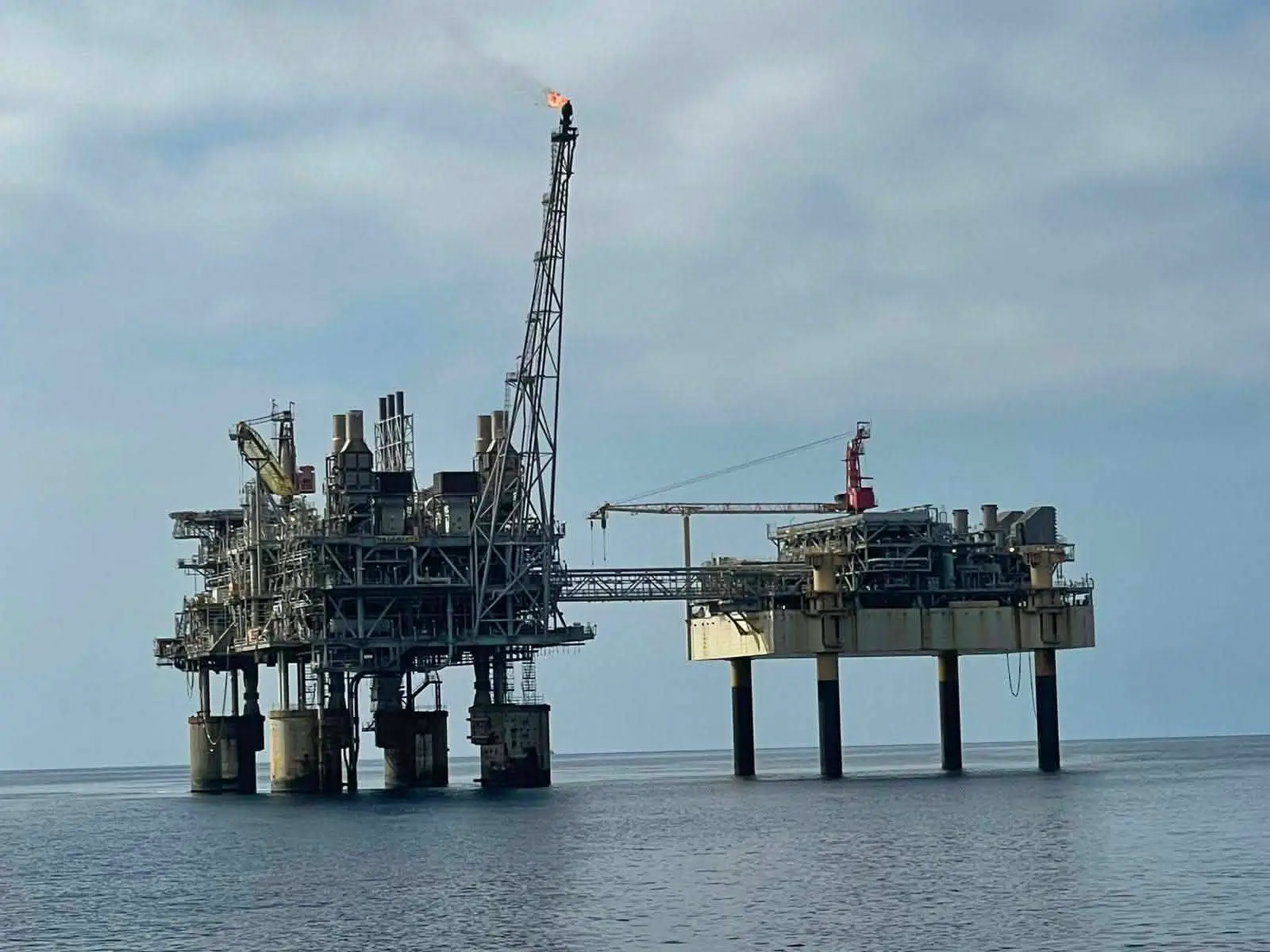
The obstacle to developing Philippine offshore energy has never been a legal one. Recto Bank, also known internationally as Reed Bank, sits squarely within the Philippine continental shelf and EEZ. The 2016 Arbitral Award settled the question: China has no lawful entitlement there, and the Philippines needs no one’s permission to explore it. Service Contract 72, covering the Sampaguita gas field at Recto Bank and held by a Filipino-led consortium, has been ready for years. What has stopped it is not the absence of a deal with China. It is the presence of Chinese ships, and the absence of Philippine resolve to push through them.
That is what has to change. Manila should treat Recto Bank as a energy security issue, not a commercial afterthought, and back it with the full weight of the State. It should clear the regulatory path for SC72 and for any qualified contractor. It should partner with capable firms from countries that respect Philippine sovereign rights, not the one state that denies them. Manila should give Philippine survey and drilling operations the same naval and Coast Guard protection any sovereign state would extend to lawful activity in its own waters. If China interferes, the answer should be documentation, diplomatic exposure, and persistence — not a return to the negotiating table that rewards the interference.
Energy insecurity is real, and the country needs the gas. But the Philippines cannot afford another experiment in wishful thinking. At Recto Bank, Manila does not need Beijing’s consent. It needs resolve.
Dr. Jeffrey Ordaniel is lead convenor of The Manila Dialogue on the South China Sea and a tenured associate professor of international security studies at Tokyo International University.