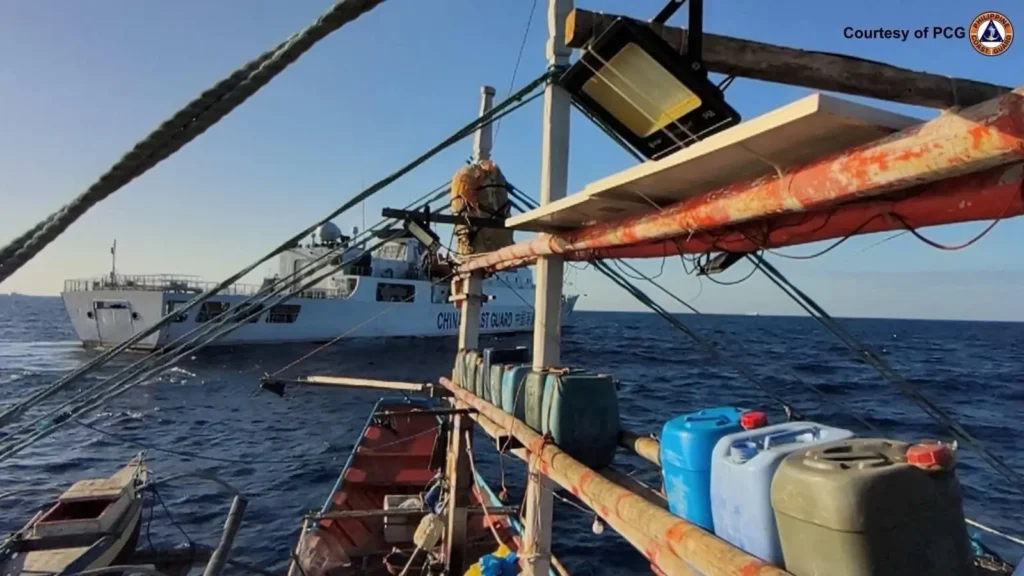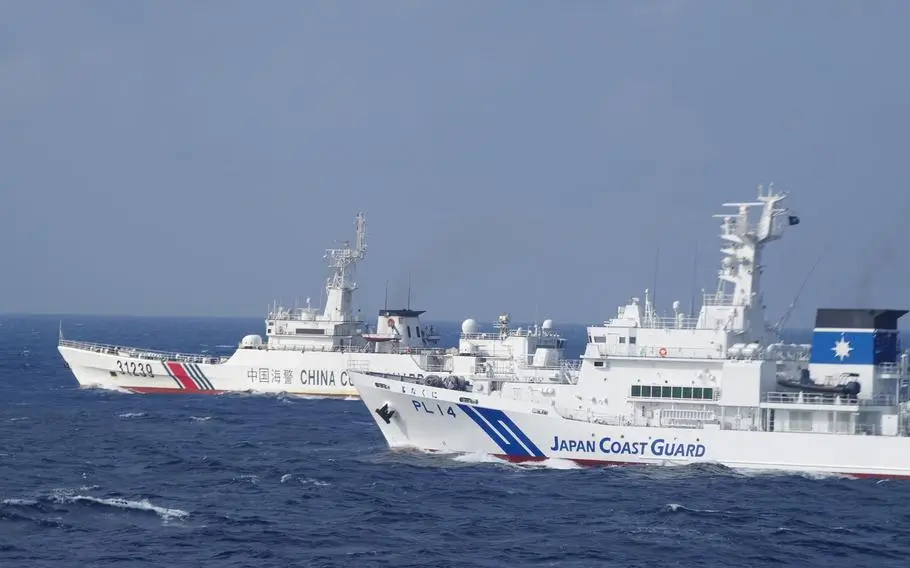

Late May and early June 2026 witnessed a flurry of activity over waters in the western Pacific Ocean east of Taiwan and the Philippines. Much as conventional wisdom continues to treat the East China Sea, Yellow Sea/West Sea, Taiwan, and the South China Sea as separate and distinct, these events underscore their interconnectedness. Sea lanes, air routes, and submarine cables carrying energy, goods, and data traverse and link these areas, while navies, air forces, law enforcement, and fishing vessels operate in relative proximity. A crisis in any of these waters may spillover into adjacent areas, affecting maritime and air traffic, data flows, and the supply chains they undergird. More frequent resort to compellence in East Asia’s maritime domain can further undermining maritime laws, rules, and institutions and risks broader escalation.
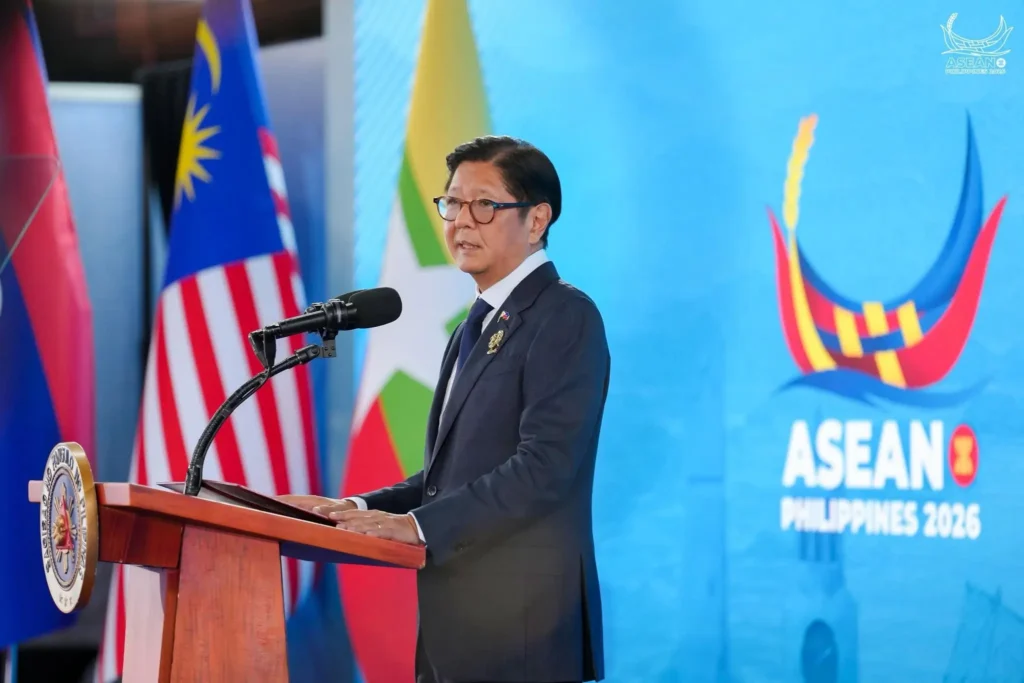
On May 28, 2026, Japanese Prime Minister Takaichi Sanae and Philippine President Ferdinand Marcos Jr. agreed in Tokyo to intelligence sharing and delimitating of their maritime boundaries in waters east of Taiwan. The People’s Republic of China (PRC), which claims Taiwan and has maritime territorial disputes with both the Philippines and Japan, swiftly condemned the arrangement as “illegal and void” the next day. On May 31, Taiwan’s Ministry of Foreign Affairs rejected the PRC’s ability comment on Taiwan’s waters and territory. Taipei also commended Japan and the Philippines for seeking to resolve differences “through peaceful dialogue and based on respect for international law” and indicated a willingness to work with both governments.
Then on June 1, the PRC Coast Guard claimed its conducted “rights-protection law enforcement” patrols east of Taiwan, although Taipei indicated that there were just two PRC Coast Guard vessels to its southeast, outside restricted waters. On the same day, media reported the People’s Liberation Army-Navy aircraft carrier, Liaoning, and its battle group were conducting drills in international waters east of the Philippines between May 26 and May 28. Then on June 2, Taipei called on Tokyo and Manila to respect Taiwan’s rights and indicated a desire for continued consultation. Tokyo responded by saying that delimitation would only “stipulate rights and obligations of Japan and the Philippines and therefore it would not be legally binding on any third party.”
On one level, developments in the late spring and early summer of 2026 demonstrate an extension of ongoing disputes over East China Sea, Taiwan, and South China Sea and highlights their overlap. Taiwan sits geographically astride southern approaches to Japan and South Korea and northern approaches to the South China Sea and the Philippines. The Philippines, PRC, and Taiwan are among the South China Sea claimants while Japan, the PRC, and Taiwan dispute parts of the East China Sea. The PRC’s claim over Taiwan further puts the latter’s waters under dispute. All are heavy users of these waters along with other actors across Asia and around the world. On their own, the South China Sea carries about one-third of global maritime traffic and the Taiwan Strait about half of global container traffic and much of the world’s most advanced semiconductors.
On another, waters in the western Pacific contain the “first island chain” that has become a line of friction for major power ambitions. An ability to veto access to and use of these areas by rivals enables Beijing to project power into the Pacific and put pressure on what it sees as possible threats, notably Japan, to some degree, South Korea, and their ally, the United States. Denying Beijing this capacity allows for a restriction of PRC naval movements and even potential pressure on the PRC coast. Unsurprisingly, the arc from Japan and the Korean Peninsula through Indonesia feature increasingly in a more contested world of pronounced major power rivalry between the PRC and United States. Such characteristics may well persist beyond tactical efforts by Beijing and Washington to seek temporary stability and détente.
Disputes and rivalries are part and parcel of world politics. The major question is how to reduce the probability that these differences do not boil over into crises and, worse, conflict. Part of the answer lies in effectively deterring aggression and escalation, which means an ability to credibly threaten and credibly assure simultaneously to discourage unilateral efforts at changing the status quo, especially through violence. No less important is restricting compellence. Like deterrence, compellence lies within the repertoire of coercive diplomacy. The difference lies in that compellence calibrates threats and assurances to force a target to change behavior, including giving up. Recent events east of Taiwan extends a pattern of PRC behavior already seen in the East and South China Seas suggesting that compellence is a preferred tool for Beijing for pursing its maritime claims.
Increasingly frequent and bold demonstrations of force to assert claims associated with compellence fuel fears of aggression more than the limited goals of deterrence. PRC military modernization, island building, militarization of the South China Sea, and aggressive patrolling make Japan, Taiwan, the Philippines, and others apprehensive and suspicious. This drives formal and informal security partnerships among these parties as well as their own military build-ups. These conditions sharpen security dilemmas and create permissive conditions for accidents and unintended, uncontrollable escalation. Limited military and crisis communications add to the likelihood of such incidents. Add to the mix rising nationalism across the region, which complicates de-escalation.
Growing tensions and rising friction spell a demand for leadership, especially in preventive diplomacy but also crisis management and deescalation. This means room for the vaunted ASEAN centrality and agency as well a middle power leadership. Regional actors in Southeast Asia and beyond as well as ASEAN should demonstrate initiative. They can openly and jointly discourage, even censure, the use of threats and force to unilaterally change the status quo and encourage dialogue based on widely held interpretations of international law and norms. Such efforts help bolster the rules, laws, and institutions that ASEAN, its members, and others in the region proclaim to be so important.
Without more consistent and unequivocal regional insistence against compellence and on negotiations based on commonly held views of international law, both unplanned escalation and the corrosion of existing international mechanisms are real risks. Given limited, even absent, formal and effective enforcement, international laws, rules, norms, as well as institutions depend on voluntary compliance for effectiveness—failing which the public identification of violations becomes more important. Lacking clear steps in these directions, there is less reason for states to stick with norms, rules, laws, institutions, and other agreements. Countries can more easily develop novel interpretations of laws or agreements and renege at will.
In East Asia, collectively highlighting attempts to force others to accept fait accompli and non-acceptance of international law, such as the 2016 Arbitral Tribunal ruling under Annex VII of UNCLOS, are particularly key. The overall lack of appetite for such behavior in the region signals tacit acceptance of compellence in pursuit of disputes and deviations from established approaches to international law. A continuation of these trends sharpens existing regional political cleavages, including within ASEAN. Of course, each state possesses the absolute sovereign right to refrain from stepping up. Taken as a whole, however, such behavior encourages those who can, to arm themselves or take things into their own hands, and those who cannot, to accept capitulation, all while rules and order are left to atrophy.